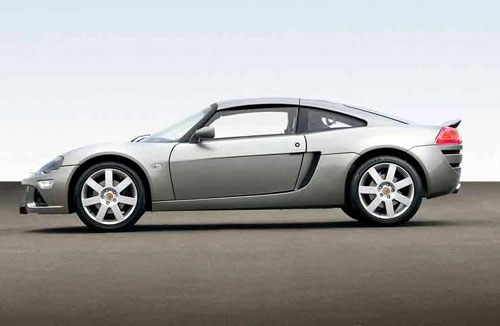
Type
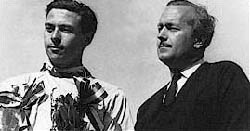
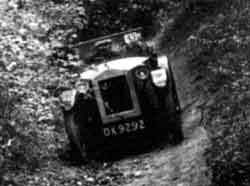
1 - Trials Special (1948)
The
first Lotus based on a 1930 Austin 7 saloon. Chapman ensured
that every body panel was stressed such that it would add
to overall strength of the car without adding unnecessary
weight. This was an engineering philosophy which was to
carry on for the rest of Lotus history |
|
Type
7 - Lotus Seven (1957 - 1972)
The
Lotus Seven began as an uprated version of the successful
Lotus Mark 6 (which was the first production sports car
for Lotus). Steel tube frame with aluminium bodywork, later
with glass-fibre nose and fenders. A variety of engines
were used. Produced mainly in kit form, it enables many
enthusiasts to own a dual-purpose road/racing sports car
at a reasonable price. Four basic variants are produced
by Lotus until 1973, when the rights to manufacture were
taken by Caterham Cars Ltd., which still produces the Caterham
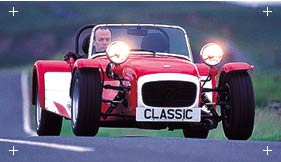
Seven (a development of the Lotus Seven Series 3). |
Lotus
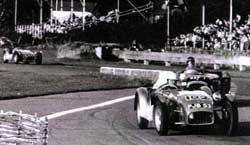
6 and 7s at racing at Goodwood, 1958
Modern
Caterham 7
|
Type
10 (1955)
In
1954, Chapman brought aerodynamics to racing with Frank
Costin, aeronautical aerodynamics engineer with De Havilland
Aircraft Company. The Mk 8 used a MG 1467cc engine. Customer
Mike Anthony wanted a Mk8 capable of running a 2 litre six
cylinder Bristol engine. The Mk 10 used Dunlop disc brakes
front and rear with an aerodynamic low drag body.
Type
11 (1956-1958)
The
"Eleven" was a class winning car at Le Mans. It set the
world speed record for an 1100cc (67 CID) car at 143mph!
The Eleven won in class at the LeMans 24 hours of Endurance
in the 1500cc and 1100cc classes and took the overall
win for the Index of Performance. Revised in 1956 to Series
2 specifications. |
|
Type
14 - Lotus Elite (1957-1962)
The
Lotus Elite was introduced at the 1957 Earls Court Motor
Show and was the first closed passenger offered by Lotus.
It used a glass fibre monocoque chassis comprised of eight
box sections. Independent front suspension by coil springs
and wishbones. Independent rear suspension by Chapman struts
incorporating coil springs. Powered by a 1216cc all aluminium
Coventry Climax engine. Winner in class at LeMans 24 hour
races. |
|
|
Type
19 (1960 to 1962)
The
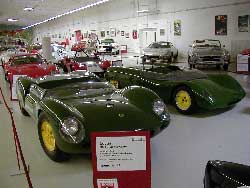
Lotus revolution began with the Lotus 18 which was one
of the first race cars with mid-engine design. Although
under-powered when compared to the then dominant Ferraris,
the Lotus 18 was capable of out handling them. In the
hands of Sterling Moss, Lotus scored its first Formula
One victory at the 1960 Grand Prix of Monaco.
For
the road going Type 19, the Type 18 was widened and formed
into Lotus' first mid-engined sports racer, powered by
2.0 and 2.5 Coventry Climax FPF engines. The 19B was built
for Dan Gurney and powered by a Ford V8. The Type
19 was also known as the Lotus Monte Carlo. |
|
|
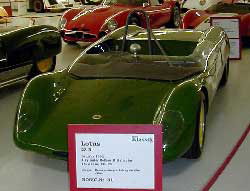
Type
23 (1962 to 1964)
One
of the most popular sports racers in Lotus history. Powered
by the Ford based engines, 1100cc and later the Lotus
Twin Cam. Used Type 19 suspension, with larger tanks.
The
Type 23 was one of the cars used for styling inspiration
for the Lotus Elise. |
|
Type
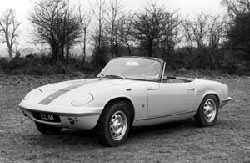
26 - Lotus Elan (1962 - 1973)
The
first Lotus road car to use the now famous steel backbone
chassis over which a glass-fibre body was fitted. First
available as a roadster, an optional hardtop was later offered,
and eventually a coupe version. The Elan continued in production
through to 1974 and became the most produced Lotus ever. |
|
|
Type
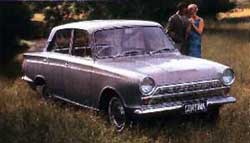
28 - Lotus Cortina (1963 - 1966)
Ford
of England came to Lotus to build 1000 special Cortina
GT's with a twin cam engine to compete in Group 2. The
Lotus Cortina sported a completely different rear suspension,
light alloy body panels and Lotus Twin Cam engine. Top
speed was 105 mph, 0-60 in 9.9 sec. The Lotus Cortina
dominated the Sedan classes in its time. Click here
for a Lotus Cortina restoration site; or here
for more Lotus Cortina Mark 1 info. |
|
|
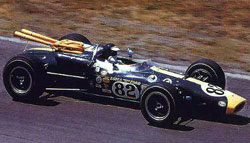
Type
38 - Indianapolis Racer (1965)
The
Lotus Type 38 represented a major structural improvement
over its predecessors, the 1963 Type 29 and the 1964 Type
34. The Type 38 was of true monocoque, stressed skin construction,
rather than being merely a "bathtub" with non-stressed
upper bodywork. Lotus estimated that it had 50% greater
torsional stiffness. The off-set suspension and DOHC 4.2
litre 505bhp V-8 engine followed previous Lotus practice.
This
car, driven by Jim Clark, won the Indianapolis 500 in 1965, and finished 2nd in
1966 behind Graham Hill in a Lola. |
|
Type
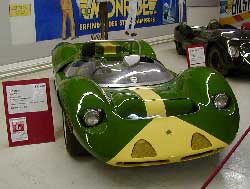
40 (1965)
Only
3 Type 40's were built. The bodywork was distinctive with
two angled stack exhausts emerging from the rear deck. The
last Lotus sports racer to be built. Powered by a Ford 5.3
litre V8, 410 bhp.
More
Type 40 info here: http://www.pistonheads.com/lotus/type40/ |
|
Type
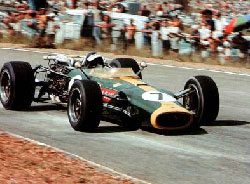
43 (1966 - 1967)
Chapman
truncated the monocoque chassis, ending it abruptly behind
the driver. The engine was mounted to the rear bulkhead and
the entire rear suspension was mounted to the engine and transaxle.
Other teams declared that the car would fold in half at the
first corner. Today EVERY Formula One, Indy Car and World
Endurance Cup car has a truncated monocoque chassis with its
engine and transaxle carrying the rear suspension, it is now
accepted as the "only" way to build a fast race car. Formula
One History |
|
Type
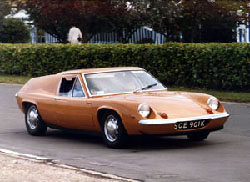
46 - Lotus Europa (1967 - 1974)
The
first non-track mid-priced mid-engined car produced. A glass
fibre body draped over a steel backbone chassis with 4 wheel
independent suspension. Early cars were powered by a Lotus
modified Renault engine. Later this engine was replaced by
the Lotus Twin Cam engine and a 5 speed gearbox. |
|
Type
49 (1967 to 1970 )
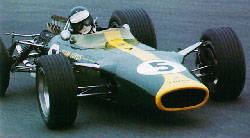
The
Lotus 49 was an uprated Lotus 43 designed for Formula 1 using
a truncated monocoque chassis. In its inaugural race it not
only took pole position in the hands of Graham Hill but was
victorious in the hands of Jim Clark. This car introduced
the Ford Cosworth DFV V8 engine to racing. Later derivatives
of the Lotus 49 introduced aerofoils, high mounted wings,
wedge shaped body panels, and the use of air management to
create downforce. The Lotus 49 took Lotus to the Constructor's
Championship in 1968. Click
here for more Lotus 49 info, or here
for even more. |
|
|
Moonraker,
1971
 Colin
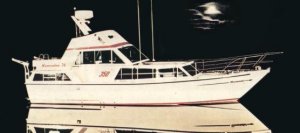
Chapman took over the Moonraker Marine boatyard in 1971
and redesigned their product, the Moonraker 36. The boat
had a glass fibre hull and Chapman was to later introduce
a revolutionary technique producing one piece vacuum injection
moulded GRP hulls in an ex-war aircraft hangar on the edge
of Hethel airfield, next to the Lotus Cars factory in Hethel.
The method was eventually used for the production of the
Lotus cars . Colin
Chapman took over the Moonraker Marine boatyard in 1971
and redesigned their product, the Moonraker 36. The boat
had a glass fibre hull and Chapman was to later introduce
a revolutionary technique producing one piece vacuum injection
moulded GRP hulls in an ex-war aircraft hangar on the edge
of Hethel airfield, next to the Lotus Cars factory in Hethel.
The method was eventually used for the production of the
Lotus cars .
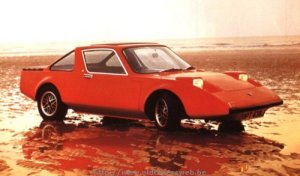 Clan
Crusader, 1971 Clan
Crusader, 1971
The
Clan Crusader is a fibreglass monocoque sports two-seater,
powered by a Rootes Imp Sport engine. Paul Haussauer and
John Frayling designed this car as a follow-up to the Europa,
but when Chapman didn't accept their plans they started
their own business, aided by government development grants
in Washington near Durham. Approximately 350 cars were built
by Clan Motor Company, some at the beginning being sold
as kit cars. More info here
and the owners club website
|
Type
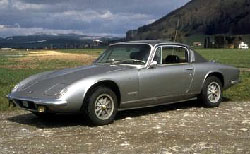
50 - Lotus Elan Plus Two (1967 - 1973)
Lotus
enlarged the backbone chassis of the Elan and kept the Twin
Cam engine, the disc brakes, the independent suspension; but
was able to offer two jump seats and a roomier cabin. This
was Lotus' first "family" car. The Elan Plus 2 retained all
of the sporty performance of the standard Elan but, added
practicality. |
|
Type
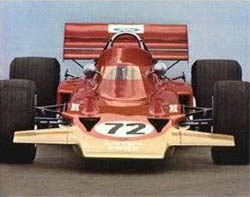
72 (1970 to 1975)
The
most successful Formula One race car ever raced. The Lotus
72 used variable rate torsion bar springs at both front and
rear, front inboard disc brakes, the continuation of the wedge
aerodynamic bodywork, multiple element rear wing and side
radiators. Today nearly every formula car uses these elements
introduced by the Lotus 72. The Lotus 72 won 3 World's Constructor's
Championships and 2 Driver's Championships and is the only
Formula One race car to have won 20 Grand Prix races. Click
here for more Lotus 72 info. |
|
Type
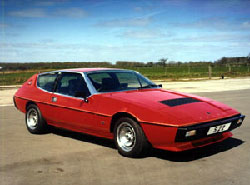
75 - Lotus Elite (1974 - 1982)
The
new Elite was a four place car with a glass-fibre body and
a steel backbone chassis. 4 wheel independent suspension system.
Power was provided by Lotus' own 907 twin cam 4 valve per
cylinder all aluminium engine. This engine was the first 4
valve production engine sold on the open market. |
|
|
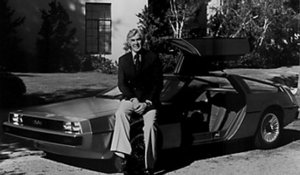 DeLorean
DMC12, 1981 DeLorean
DMC12, 1981
In
1981, Chapman became involved in a new venture with his
friend John DeLorean. The DeLorean sports car is now best
remembered for its role in the Back to the Future films,
but prior to this the name DeLorean was best known for scandal.
The British government gave DeLorean tens of millions of
pounds to put his sports car into production in an unemployment
blackspot in Belfast, at an axis between Catholic and Protestant
communities. De Lorean used some of the money to pay Chapman
to design the car (based on the Lotus Esprit), and further
money was extracted from the government using a network
of offshore companies. The car once produced was underpowered,
overpriced, and extremely poor quality - DeLorean declared
insolvency in January 1982. DeLorean's arrest on coke-dealing
charges simply added to the chaos (he successfully defended
those charges). In February, the British government appointed
receivers and by October production had ceased, after only
8,550 cars had been built. DeLorean evaded extradition and
was never jailed for his part in the operation. Colin Chapman
died of a heart attack in 1982. Lotus MD Fred Bushell was
left to serve a three year sentence. The frustrated trial
judge commented that if Chapman and De Lorean had been there
they would have each received 10 year sentences for "an
outrageous and massive fraud".
|
|
Type
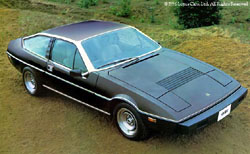
76 - Lotus Eclat (1975 - 1982)
The
Lotus Eclat was a fastback version of the new Elite. The
rear roof line of the Elite was sloped down into a sporty
fastback. Replacing the glassback of the Elite was a trunk
lid that opened to a generously sized and practical boot.
This
type designation was also assigned to an F1 car. It featured
twin brake pedals (for left foot braking), with an electronically
activated clutch controlled by a button atop the gear selector. |
|
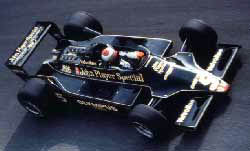
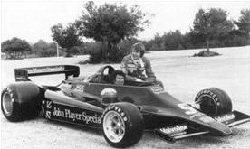
Type
78 (1974)
The
JPS Mk1, designed as a replacement for the Type 72. Click
here for more Team Lotus info. |
|
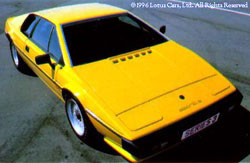
Type
79 - Lotus Esprit (1976 - 1980)
The
Lotus Esprit was first shown to the world as a styling exercise
by the famous Italian design studio of Giugiaro Design in
1974. The show car was so successful, and inquiries so great,
that Lotus committed to taking the successor to the Europa
into production. Glass-Fibre bodied, steel backbone chassis
and Lotus' own 907 multi-valve engine mounted mid-ship with
4 wheel independent suspension were all features of these
first Esprits. |
|
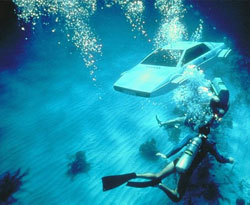
James Bond Submarine Esprit, 1977
The Lotus Esprit was perhaps the most advanced car Bond has driven, it had the capability to transform into a submarine, and an array of other ingenious gadgets. The Lotus was personally delivered to 007 in Corsica in the film The Spy Who Loved Me, driven by Q, who warned Bond to be careful with the car. Bond responded to Q with a smart remark, dropped the clutch, and took off with a grinding screech. |
|
Type
79 (1978 to 1979)
The
Lotus 79 refined the concept of Ground Effects (a concept
first developed by Lotus in their Type 78) to its fullest
extension. It dominated the season scoring 8 Grand Prix wins
out of the 16 races. Lotus became the 1st team in Formula
1 history to score 3 consecutive 1-2 victories. Lotus again
won the Constructor's and Driver's Championships. Every race
car today uses the Ground Effects system of under car air
management. Click
here for more Lotus 79 info. |
|
|
Type
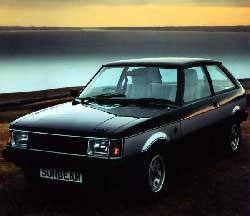
81 - Sunbeam Lotus Talbot (1980)
A derivative of the Lotus
907 engine was dropped into a Chrysler (Omni) Sunbeam chassis
and became an instant Rally winner. Click here
for the UK Avenger and Sunbeam Owners Club.
This
type designation was also used for an F1 car. |
|
Type
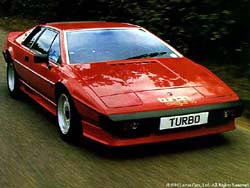
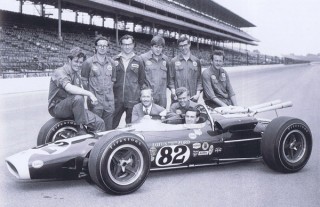
82 - Lotus Turbo Esprit (1981 - 1987)
Lotus
used the turbocharging technology learned in racing and applied
it to the Esprit. Instantly power output was raised to 210
bhp from 2.2 litres. The Turbo Esprit received revised rear
suspension and a revised and stronger chassis. A deeper front
spoiler and taller spoiler were added to cope with the higher
speeds. The Turbo Esprit was capable of 0-60 mph in 6 seconds
and 150 mph. Power was raised to 215 bhp in 1986 with Bosch
K-Jetronic fuel injection. |
|
Excel (1982 - 1992)
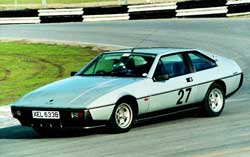
Around 1982/83 when the Excel was introduced, the Eclat Excel also existed. Lotus put forward the Excel as an improved Eclat to avoid Type Approval. Lotus even roled over the name and the first Excels were badged Eclat on the boot, Excel on the rear wings, but after a short while the Eclat badge was dropped and by late 1983 the Excel was fully established.
http://www.mikecauser.com/
http://www.lotusexcel.net |
|
|
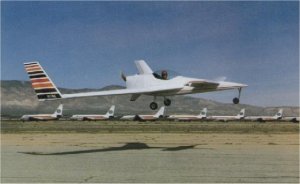 Ultralight,
1982 Ultralight,
1982
Colin
Chapman loved to fly and had a vision of designing and making
an aeroplane for the individual. He dabbled in designing
a personal jet in the 1970's, but turned to ultralights
as they were less regulated. Very simple winged hang gliders
with a small engine and propeller, he was aiming for 2-seat
aeroplanes that could be used for both business and pleasure.
Designer Burt Rutan was contracted to design and build a
prototype 2-seater ultralight for him whilst Lotus developed
a light and small engine. This project was never finished
before Colin Chapmans death.
|
|
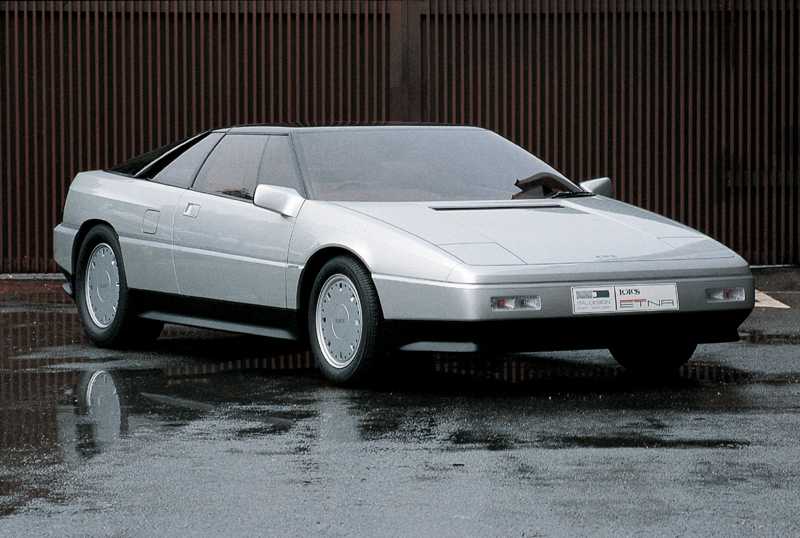 Type 90 (1981) Type 90 (1981)
The proposed new Elan project, using Toyota running gear. Became
project X100 when Toyota running gear was dropped.
Etna - M300 (1984)
2 seater 4 litre rear wheel drive concept car. V8 engine giving 336.00 PS (247 kW or 331 HP) at 6500rpm. Top speed: 290.0 km/h (180.2 mph) and 0-60 miles: 4.3 seconds.
The Lotus Etna concept car was designed by Giorgetto Giuguaro from Ital Design. It was displayed at the Birmingham Motorshow in 1984. The engine was to be mid mounted and the chassis was loosely based around the Lotus Esprit's, however the wheel base was 3 inches longer. Lotus intended it to feature the new 4 litre Lotus Type 909 V8 engine (a derivative of the Esprit engine). Only one car was ever made. More here
|
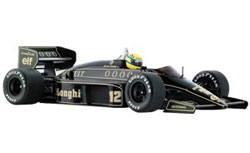
Type 98T
This is the Lotus 98T, as raced in the 1986 F1 season by Ayrton Senna and Jason Dumfries. It was powered by the Renault 1.5 litre V6 Turbo engine. Senna drove it to two GP victories and had eight other point finishes. Lotus took third in the Constructors' points table. |
 |
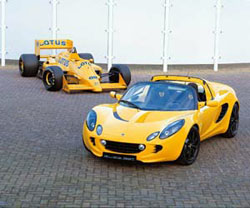
Type 99T (1987)
Unveiled in London on 3rd February 1987 the Lotus 99T holds the honour of being the last ever Lotus Formula One car to win a Grand Prix.
Sportung bright yellow and blue of the sponsors Camel. Moving away from the Renault powerplants that had been employed since the Type 93T in 1983, the 99T harnessed a new twin-turbo Honda unit capable of pushing out more than 800bhp. This car also reintroduced the revolutionary ‘Active' suspension system. Active suspension was eventually outlawed as it gave massive performance and handling advantages. |
 |
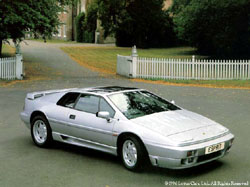
Lotus
Esprit Turbo (1988 - 1989)
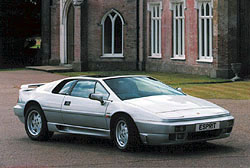
In
1988 the Esprit gave up its original lines of Giugiaro and
received a complete makeover. The new lines were curved and
softer. The interior was also greatly revised. The electrical
system was completely replaced with new wiring, gauges, switches
and central electric door locks. In 1989 the Esprit Turbo
engine received a complete electronic engine management system
based on Delco components. This further boosted output to
228 bhp and 0-60 times were reduced to 5.2 seconds and top
speed rose to 155 mph. A stronger Renault built 5 speed transmission
was also fitted to handle the increased power. |
|
Type
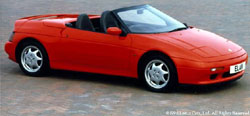
100 - Lotus Elan (1990)
Powered
by a 1588cc twin cam 16 valve turbocharged engine that produces
162 bhp, the Elan goes from 0 to 60 in 6.7 seconds and attains
a top speed of 137 mph. The chassis is a hybrid of Lotus'
classic steel backbone mated with advanced composites to create
one the stiffest cars in the world. |
|
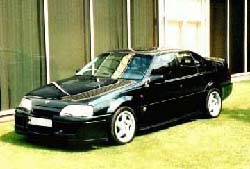
Type
104 - Lotus Carlton/Omega (1990)
Lotus
developed and built version of the Vauxhall Omega and Opel
Omega 4 door sedan with a 3.6 lire 24 valve twin turbo straight
six. A 6 speed gearbox from the Lotus developed Corvette ZR-1
allows the Lotus Carlton/Omega to hit 170 mph and 0-60 in
under 6 seconds. Click here
for James Waddington's Lotus Carlton site. |
|
|
 Lotus
Emotion Lotus
Emotion
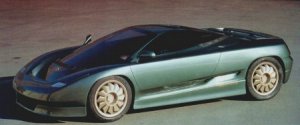
In
1991 Bertone decided to design a new body for the chassis
of the Lotus Esprit, produced by General Motors. The chassis
is the same length as the Lotus Esprit (245 cm), but with
the total length at just over 4 metres (406 cm) this really
is a very compact car. Link to Bertone
here
|
Lotus
Esprit Turbo SE (1989-1993)
The
Esprit Turbo SE is a further development of what is a very
capable vehicle. The power of the Esprit Turbo SE is raised
to 280 bhp with the use of a Lotus developed Chargecooler
and and enhanced Engine Management System that uses six fuel
injectors. Outwardly the Esprit Turbo SE sports a deeper front
air dam and a rear wing. 0-60 times have fallen into the mid
4 second range and top speed is in excess of 165 mph. In 1991
three variations of this car were produced, the standard Turbo
SE, the Jim Clark Special, and the X180R (the street version
of the race car). |
|
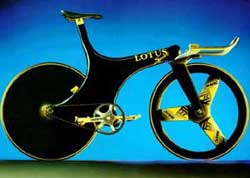
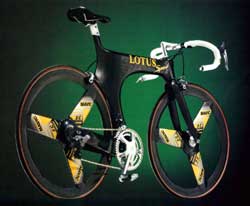
Type
108 prototype Olympic bicycle
Gold Medal Barcelona (1992)
Lotus
developed the aerodynamically optimised carbonfibre Lotus
Sport bicycle, on which Chris Boardman rode to a gold medal
in the 4000 metre pursuit at the Barcelona Olympic Games in
July 1992. Type 110 was the production version of type 108
bicycle. |
|
|
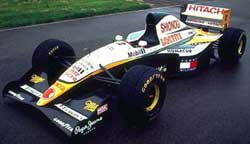
Type 109
-
F1 car, 1994
Mugen/Honda
ZA5C engined F1 car.
See here
for the full tech spec. |
|
Type 110
- Road Bike
The
road racing version of the carbon bike (brakes and gears,
twin rear blades), as ridden by Boardman et al in the Tour
de France |
|
Scorpion
Tank
 The
army recruited Lotus in 1994 to develop active suspension
and active track tensioning for the Scorpion tank; by keeping
the Scorpion's body steady while on the move, they improved
its speed over rough terrain and created a more stable gun
platform. Boats, trucks, buses and even microlights appear
in their portfolio of projects. The
army recruited Lotus in 1994 to develop active suspension
and active track tensioning for the Scorpion tank; by keeping
the Scorpion's body steady while on the move, they improved
its speed over rough terrain and created a more stable gun
platform. Boats, trucks, buses and even microlights appear
in their portfolio of projects. |
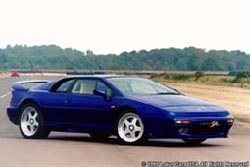
Lotus
Esprit S4 & S4s (1994-1995)
The
S4 represented a significant milestone for the Esprit model.
Exterior changes included new front and rear bumpers and valances,
new sidepods, a mid-mounted rear wing, and 17" wheels. Inside,
a larger passenger cabin, the addition of a passenger airbag,
and power assisted steering helped to elevate the Esprit to
new levels of refinement. Joining the S4 for 1995 was the
S4s, which was visually distinguished by an aggressive rear
wing providing additional downforce. A larger turbocharger
provided up to 300 bhp and was complimented by a firmer suspension
with uprated springs and dampers. Top speed of 165 mph and
a 0-60 mph time of 4.6 seconds. |
|
|
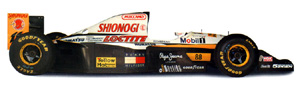 Type
112 (1995) Type
112 (1995)
A
stillborn F1 car intended for the 95 season. Sadly it never
progressed beyond the drawing board as a result of Teams
demise.
112
was originally allocated to the car which became the Elise,
but the number was swapped for 111 (which had already been
allocated to the 95 F1 car) because at one early stage the
intention was to call the Elise "one-eleven" in
honour of the original Lotus Eleven from the fifties. |
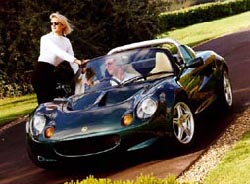
Type
111 - Lotus Elise (1996)
Conceived
as a low production model, the Elise has shattered sales expectations
and returned Lotus to the forefront of sports car production.
This incredible car has also spawned some very interesting
limited editions, including the 340R, the Exige coupe, and
several motorsport derivatives.
The
major (IMO) derivatives of the Elise are summarised below,
for a more complete list of variations on the Elise, click here |
|
Type 113
Number
not allocated!
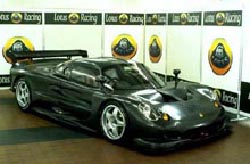
Type
114 - Le Mans / GT2 Esprit
(1996)
The Type 114 debuted at the BPR Karcher Global Endurance GT series four hour race at Donnington., an improved version was later unveiled at the Paul Richard
circuit for the first race of 1996 GT series. It had a Lotus
V8 engine, a six-speed racing transmission, F1-style aerodynamics,
carbon brakes, and is down to the 900 kg minimum weight
limit. After showing initial promise, it retired due to
fractured exhaust. More info here |
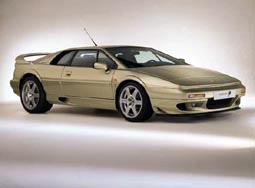
Lotus
Esprit V8 (1997)
After
more than 20 years, the Esprit's venerable 4 cylinder engine
was replaced with a compact yet powerful 3.5 litre twin turbo
V8. This very special car is the quickest and fastest of all
road going Lotus. Capable of attaining 60 mph in just over
4 seconds with a top speed of 180 mph places this Esprit firmly
in supercar territory. A revised suspension benefits from
17" front and 18" rear wheels mounting Michelin or Dunlop
Z rated high performance tires. The latest V8 includes AP
Racing Brakes with cross-drilled discs, OZ Racing wheels,
and a tailgate-mounted rear wing. Available options include
a removable glass roof panel. |
|
|
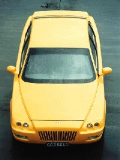
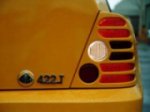
Lotus Emme
(1997)
While
mainly specialising in scooters, the Brazilian company Emme
joined Lotus in 1997 to produce a sedan based on the existing
Emme 420 and 420T. The turbocharged 16-valve engine produced
over 121 hp per litre and 354 Newton metres of torque, achieving
0-60 mph in 4.9 sec, 0-100 mph in 11.9 sec, and with a top
speed 171mph. Only 12-15 were ever built. |
|
|
Type
115 - Lotus Elise GT1 (1997)
In 1997
Lotus unveiled the Lotus Elise GT1, a derivative of the Lotus Elise and
powered by a 3.5 litre eight-cylinder engine with 580bhp. The body is carbon-fibre. Performance is 0-60 in 3.8 seconds,
and top speed is 200 mph.
For more info click here |
|
340R
(August 1999)
Outrageously
styled and dynamically outstanding, the 340R is powered by
a 1.8-litre VHPD (Very High Performance Derivative) K series
engine producing 180PS. And in an extremely light car, equipped
with a close ratio gearbox, that adds up to explosive performance
of 0-60mph in 4.4secs, for instance, and a top speed of 133mph
(214km/h). |
|
|
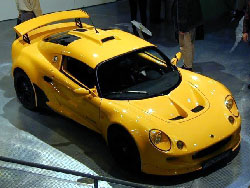
Exige
(April 2000)
The
Exige is a road-going replica of the Sport Elise racer,
albeit with a few concessions to type approval regulations
and the rigours of everyday road use.
More
info here |
|
|
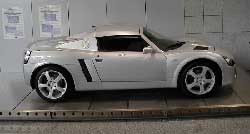
Type
116 - Opel Speedster / Vauxhall VX220 (2000)
Nicknamed
the Skipton in Hethel during development, Lotus
has worked in co-operation with designers and engineers
from the Opel/Vauxhall International Technical Development
Centre in Ruesselsheim, Germany, to build the VX200 (named
the Speedster for the European market). Lotus built the
original concept show car - one of the stars of the March
1999 Geneva Motorshow. For more info, click here |
|
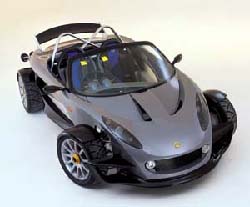
Lotus
Extreme concept car (2000)
The
proposed vehicle is a radical, two-seater, with a fighter-cockpit
seating arrangement, bringing together influences from aerospace,
motorcycle and powerboat vehicles. Its construction will comprise
of an aluminium chassis with composite bodywork and carbon
fibre aerodynamic finning. The driving experience will be
maximised by a unique suspension system, which will allow
the vehicle to lean into bends. The total weight of the vehicle
would be in the region of only 450kg, and the concept specification
estimates a top speed of 150mph and a 0-60mph time of around
5 seconds. More info here, more pictures here |
|
|
Lotus
Shopping Trolley (2000)
"The
fundamental techniques of vehicle engineering apply to both
sportscars and to all other vehicles including the humble
shopping trolley. The requirements for a fine handling sportscar
are both stability and agility in the driving experience.
This can be a conflict but with clever, intelligent design
you can find a perfect and balance between sporty handling
and confidence inspiring stability." More info here |
|
Type
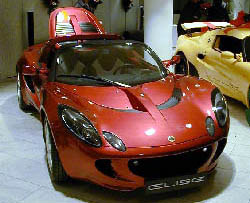
117 - Lotus Elise Mark II (2001)
(This
car is identified as a 111 variant for type approval). The
Elise updated. The smooth contours have faded in favour of
a more aggressive angular image. Available with two options
- the Sports Tourer or the Race Tech.
Nicknamed
the Monza in Hethel during development.
More info here, and some pre-production model pictures here (along with the M250) |
|
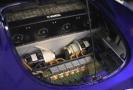 Electric Lotus Elise, manufactured
by Zytek Electric Vehicles Limited. The Zytek electric Lotus
Elise is powered by two oil-cooled, internally mounted brushless
DC, Zytek electric motors. Power is transmitted through
custom Zytek gearboxes and standard Lotus drive shafts,
each motor weighing only 13 kg but producing up to 75kW
(100bhp) and 550 Nm torque. The car has a driving Range
of about 120 miles (urban driving), and a top speed of 90
mph. Acceleration is 0-90 mph in 11.2 sec, and the car weighs
875 kg (with battery pack). Other features include trailing
throttle and pedal activated regenerative braking. Electric Lotus Elise, manufactured
by Zytek Electric Vehicles Limited. The Zytek electric Lotus
Elise is powered by two oil-cooled, internally mounted brushless
DC, Zytek electric motors. Power is transmitted through
custom Zytek gearboxes and standard Lotus drive shafts,
each motor weighing only 13 kg but producing up to 75kW
(100bhp) and 550 Nm torque. The car has a driving Range
of about 120 miles (urban driving), and a top speed of 90
mph. Acceleration is 0-90 mph in 11.2 sec, and the car weighs
875 kg (with battery pack). Other features include trailing
throttle and pedal activated regenerative braking. |
|
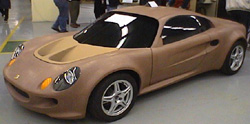
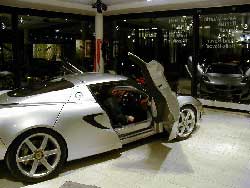 M250 (Type 118?) M250 (Type 118?)
Frankfurt
Motorshow 1999 - Powered
by a mid-mounted Lotus-tuned 3.0 litre V6 engine that drives
the rear wheels through a six-speed gearbox, project M250
was aimed to slot into the Lotus line-up between the Elise
and the Esprit.
Click here for a preview of the
M250. More info from Pistonheads.
Unfortunately
this programme was cancelled :-( |
Lotus
Lada (2002)
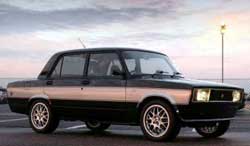 A
1996 Lada given a £100,000 makeover by Lotus cars of Norfolk,
all courtesy of the BBC TV series Top Gear. Modifications
made were sports lowered and much stiffened suspension,
bilstein dampers, sports brakes, unique paint and decals,
specially trimmed OMP racing seats with interior specially
tailored to match, Momo steering wheel, big fat BBS alloy
wheels with Yokohama track tyres. The engine is a Fiat 2
litre twin cam engine that has been stage 2 race tuned by
renowned race engineer Guy Croft, and coupled to a fiat
131 five speed box via a race clutch. it develops approximately
180bhp at 5,000 RPM, is capable of 0-60 in about 7 seconds
and has a top speed of 135mph. More info here: http://www.guy-croft.com/page11.html A
1996 Lada given a £100,000 makeover by Lotus cars of Norfolk,
all courtesy of the BBC TV series Top Gear. Modifications
made were sports lowered and much stiffened suspension,
bilstein dampers, sports brakes, unique paint and decals,
specially trimmed OMP racing seats with interior specially
tailored to match, Momo steering wheel, big fat BBS alloy
wheels with Yokohama track tyres. The engine is a Fiat 2
litre twin cam engine that has been stage 2 race tuned by
renowned race engineer Guy Croft, and coupled to a fiat
131 five speed box via a race clutch. it develops approximately
180bhp at 5,000 RPM, is capable of 0-60 in about 7 seconds
and has a top speed of 135mph. More info here: http://www.guy-croft.com/page11.html |
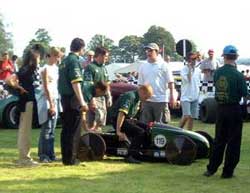 Type
119 Lotus soapbox (July 2002) Type
119 Lotus soapbox (July 2002)
The
world’s fastest go-kart, capable of reaching 60mph
in 4.3 seconds, and has a top speed of 207mph. The Lotus Type 119 weighs just 77lb, has a carbon fibre
monocoque and utilises bonded aluminium in its construction.
The engineless kart is designed to race on downhill courses
where gravity will power it.
It
competed for the first time at The Goodwood Festival Of
Speed in the '2002 Goodwood Gravity Racing Soapbox Challenge'
- where it was expected to reach a speed of around 60mph. More info here (Picture © MarkS)
M120
- Elise Coupe (1998) & M121
- Europa S (2005)
Project
M120 was suspended in 1998. To answer the obvious question - the
addition of a roof meant that the whole car was stiffer,
which meant that lower sills could be used to accommodate
larger doors - making entry and exit easier.
More
powerful engines were also considered - including the
Rover 2.5 KV6 and even (reportedly) the 1.6 V8 twin turbo
used in the Suzuki concept car (250bhp). The Elise
Coupe (codenamed Sepang) eventually emerged in Dec 2005 as the Lotus Europa, click here for
more details.
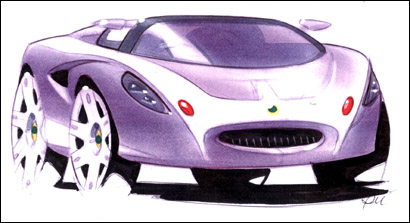 Lotus ECO2S, 2002 Lotus ECO2S, 2002
The
2002 Geneva motor saw the launch of Lotus Engineering's
project: 'ECO2s' (pronounced ECOS). The project
uses a number of new techniques to reduce emissions and
body weight with the ultimate goal of an environmentally
friendly sports car.
More info here
Federalised
Elise, January 2003 (Elise 111R)
In
January 2003 the first official announcement about a US
bound Elise was made, to be based on the European Elise
but with additional safety equipment to satisfy US legalities.
At the same time as this announcement, it was also declared
that the the Lotus Esprit would reach the end of its long
and illustrious life in early 2004 in the USA and mid 2003
in Europe - with an all new replacement to be announced
at a future date.
In September 2003 Lotus announced that
the Toyota 2ZZ-GE 1.8 litre 4 cylinder 16-valve engine with
Variable Valve Timing and Lift-Intelligent (VVTL-i) system
had been chosen, to be mated to a six-speed gearbox and
tuned by Lotus specifically for the U.S. and to produce
around 190hp. The Federalised Elise was officially launched
at the 2004 Los Angeles Auto Show where the weight was confirmed
at 891kg, 0-60mph claimed at 4.8 seconds and top speed at
150mph. The additional weight is down to twin airbags, brake
servo and TRW anti-lock brakes, climate control, air-conditioning,
carpets and additional sound proofing and a larger fuel
tank. It also has a starter button.
It
was planned to get some in-life experience of the engine
and to reduce potential launch issues and associated legal
problems in the US by offering the same engine in the new
Exige S2, due to be launched at the Geneva motorshow in
2004. The Toyota Elise was also made available in the UK
under the name 111R in January 2004
|
|
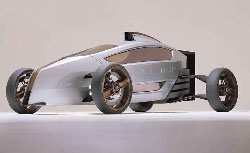
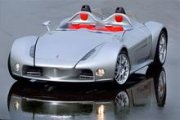
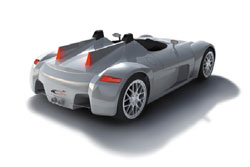
The
Pininfarina Enjoy,
Sept 2003
Concept
car by Pininfarina called the Enjoy. This car converts
from a road car with fenders to a open wheeled, race
car. More details here |
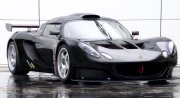 Motorsport
Exige, Jan 2005 Motorsport
Exige, Jan 2005
A direct motorsport derivative of the successful Lotus Exige.
This Lotus designed and engineered racecar was part manufactured
by RTN, the team responsible for the Le Mans winning Bentley,
using the latest motorsport techniques and procedures to
produce a lightweight yet strong carbonfibre bodywork structure.
More details here
Lotus Sport Exige 240R, 25th Feb 2005
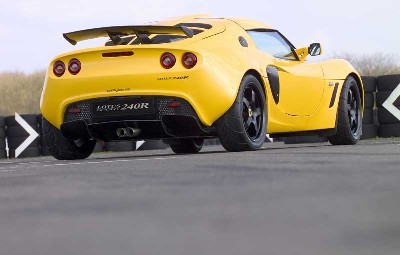 Lotus
Sport, the performance division of Lotus Cars Ltd.,
developed the Lotus Sport Exige 240R, a limited edition of 50 cars. With a supercharged and intercooled engine producing over 240 hp and over 170 lbft
of torque, 0- 60mph in
less than 4s and 100mph (160 km/h) in less than
10s before topping out at 155 mph (249 km/h). At
this top speed the aerodynamics produce 113 kg
of downforce increasing grip, stability and safety. More
details here and here Lotus
Sport, the performance division of Lotus Cars Ltd.,
developed the Lotus Sport Exige 240R, a limited edition of 50 cars. With a supercharged and intercooled engine producing over 240 hp and over 170 lbft
of torque, 0- 60mph in
less than 4s and 100mph (160 km/h) in less than
10s before topping out at 155 mph (249 km/h). At
this top speed the aerodynamics produce 113 kg
of downforce increasing grip, stability and safety. More
details here and here
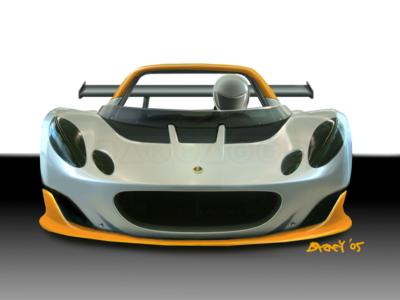 Lotus Circuit Car, June 2005 Lotus Circuit Car, June 2005
Tony
Shute, Head of Product Development at Lotus Cars: "The new product has allowed
Lotus to once again apply its key "performance through
lightweight" philosophy. This is in order to achieve
an innovative product for the track day and club racing
Lotus enthusiast whilst staying true to the key design attributes
of the Elise and Exige products."
Project delayed whilst Lotus focused on the
Europa. More here.
Lotus Sport Exige GT3, Dec 2005
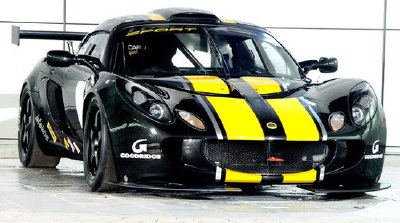 A prototype of the Lotus Sport Exige race
car was unveiled at the annual FIA GT Championship presentation
ceremony outside the world famous Casino in Monte Carlo,
Monaco on 02 December, 2005. This car was designed for the
FIA series to start in 2006 for
race cars that have an equal power to weight, and that have
a direct lineage to their road going versions. In its maiden
year (2006), Lotus Cadena ran in the Avon Tyres British
GT Championship. More here A prototype of the Lotus Sport Exige race
car was unveiled at the annual FIA GT Championship presentation
ceremony outside the world famous Casino in Monte Carlo,
Monaco on 02 December, 2005. This car was designed for the
FIA series to start in 2006 for
race cars that have an equal power to weight, and that have
a direct lineage to their road going versions. In its maiden
year (2006), Lotus Cadena ran in the Avon Tyres British
GT Championship. More here
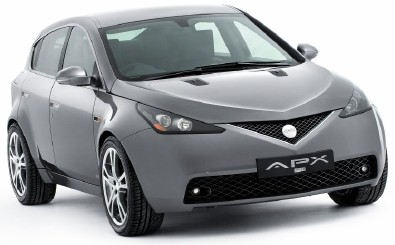 APX, VVA technology, Feb 2006 APX, VVA technology, Feb 2006
Displayed
at Geneva, the Aluminium Performance Crossover (APX) concept
- a showcase of Lotus Engineering’s aluminium Versatile
Vehicle Architecture (VVA). The
design concept is expected to be used for the new Esprit
replacement, but Lotus is also hoping to sell the concept
to third parties. More details here
Exige 265E, Aug 2006
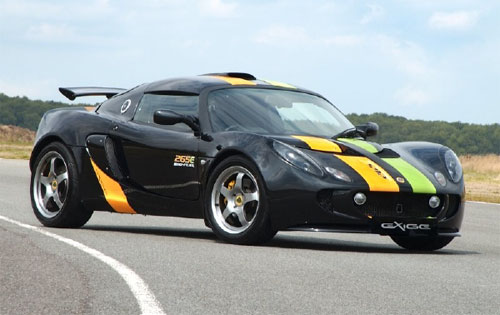 Lotus Cars has introduced the Exige 265E, which
it describes as the most powerful road version of the car
ever. The E suffix indicates that the Exige has been adapted
to run on bio-ethanol. Lotus
fitted a slightly modified version of the 2ZZ VVTL-i supercharged
four-cylinder that powers the production Exige S. Running
on E85, the car delivers 265 horsepower and sprints from
zero to 60 mph in 3.9 seconds, with a top speed of 158 mph. Lotus Cars has introduced the Exige 265E, which
it describes as the most powerful road version of the car
ever. The E suffix indicates that the Exige has been adapted
to run on bio-ethanol. Lotus
fitted a slightly modified version of the 2ZZ VVTL-i supercharged
four-cylinder that powers the production Exige S. Running
on E85, the car delivers 265 horsepower and sprints from
zero to 60 mph in 3.9 seconds, with a top speed of 158 mph.
Lotus said it added two fuel injectors at the supercharger
inlet to increase the amount of fuel being injected into
the engine under higher loads and to cool the charge air
before combustion. It also enlarged the four existing fuel
injectors on the intake manifold and recalibrated the engine
electronics. Lotus Engineering powertrain chief Geraint
Castleton-White explained: "We wanted to prove that
green sports cars can also be very high-performing sports
cars." Lotus said it has no immediate plans to put the Exige 265E
into production. See here for full details
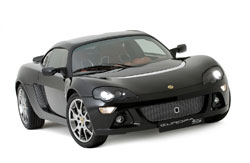 GT3 Exige, 2007 GT3 Exige, 2007
Lotus Sport, the race car performance arm of Lotus Cars Ltd, unveiled the Lotus Exige GT3 concept road vehicle at the 77th annual Geneva International Motor Show. More details here
Tesla, 2006
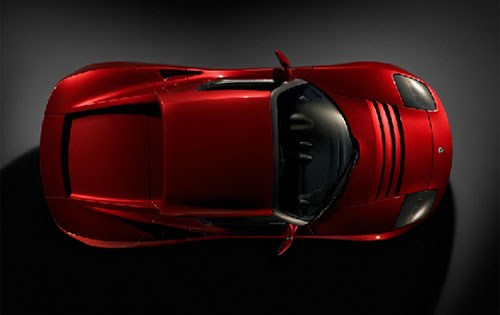
Silicon
Valley startup firm Tesla Motors developed a pure-electric, high-performance two-seater
called simply the Roadster. The carbon-fiber-bodied Tesla Roadster was originally designed by
and jointly developed with Lotus.
More info here and at http://www.teslamotors.com/ |
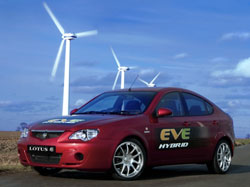 EVE HYBRID, March 2007 EVE HYBRID, March 2007
The EVE programme was undertaken by a cross-functional team of Lotus and Proton engineers working together at Hethel and Shah Alam, Kuala Lumpur. The resulting EVE Hybrid demonstrator, based on a Proton Gen.2 compact midsize car with a 1.6litre gasoline engine, but with tailpipe emissions down by 22% and fuel economy improved by 28%. See here for more details
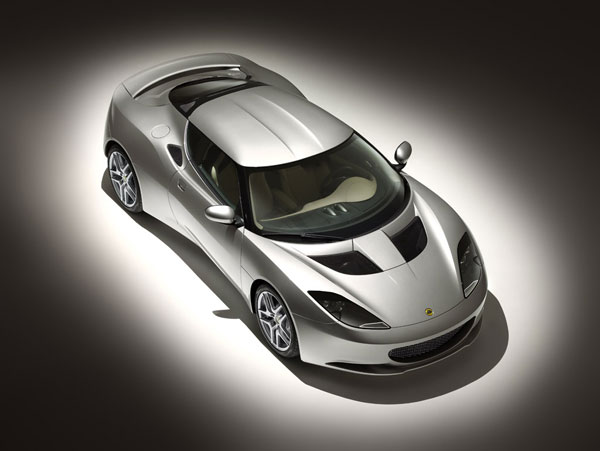 Evora, July 2008 (Type 124) Evora, July 2008 (Type 124)
One of the stars of the London Motorshow was the launch of the Lotus Evora. This is the long awaited 'Project Eagle' 2+2 sports car. Later, in Geneva Switzerland, Lotus officially confirmed Evora (named after a town in Portugal) production specifications ahead of the May 2009 launch in Europe. See here for details
Announced to the 2009 Frankfurt Motorshow, the Evora Type 124 to be homologated for either FIA or GT3-spec racing, but until the technical regulations for those series are finalised - and until Lotus knows exactly how quick the Evora Type 124 is - the two factory-supported cars will run broadly to VLN Nurburgring endurance championship regs.
RUMOURS - past & present - see here ;)
Exos, 2010
The Exos Experience, initiated and operated by Lotus Motorsport, is an elite club. A club in which the limited number of Lotus 125 owner drivers can refine their driving skills and challenge themselves in Formula 1™ inspired technology combined with expert one-to-one advice from former Grand Prix drivers and trainers. Full press release here, full report from the Golden Gate Lotus Club here
Elite, 2014 (announced 2010)
Set for release in spring 2014, this 2+2 GT will set a new benchmark in design, performance and emissions. A front-mid positioned 5.0l V8 engine delivering up to 620 PS meaning drivers can expect to go from 0-100 km/h in approximately 3.5 to 3.7 seconds. Petrol, hybrid optional with hybrid gearbox & integrated electric motors and KERS. Full press release here
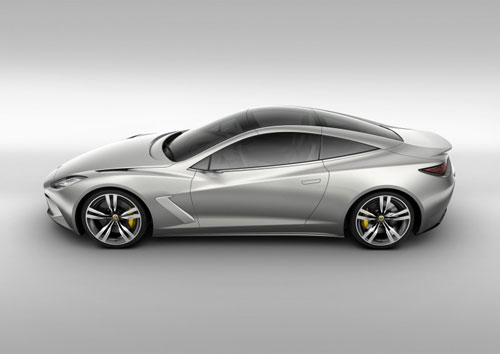
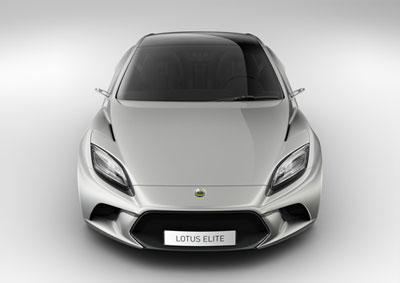
Have the wing mirrors fallen off already? ;)
Motorsport Plans
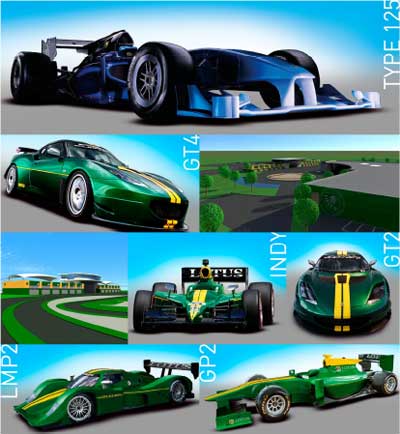
October 2010. Plans unveiled for IndyCar, GP2 and GP3, Evora GT4, GT2, LMP2 (planned for the 24 Hr Le Mans in 2012) here.
DAWN OF A NEW ERA PARIS 2010
A new fleet of cars announced at the Paris Mororshow, Sept 2010 - see here for more details. The models include a replacement for the Elise, an all-new Esprit, the Elite and a larger Eterne saloon based on it, a new Elan and a new city car co-developed with parent firm Proton.
Geneva 2011
Details of the Enduro and Evora, plus club racer here |